July 4, 2026 · 12:27 PM
777 eggs in a backpack
A weekly ranked customs-curio roundup led by Hong Kong's 777 suspected endangered bird eggs, 415 reptiles hidden in a spare tyre compartment, and a massive Tampa antiquities seizure.

The strangest customs cases this week shared one plain move: they made contraband look like something too ordinary to deserve a second look.
A backpack became an incubator. A spare tyre compartment became a reptile hold. A shipment of ancient objects became a cultural-property investigation. Lab certificates, branded watches, truck cargo, and passenger jewellery all carried the same bet: the label would be believed before the object was examined.
The cases below are ranked by curiosity factor: the surprise of the object, the neatness of the disguise, and how much the tactic depended on an everyday container doing the smuggler's talking.
1. 777 eggs in a backpack
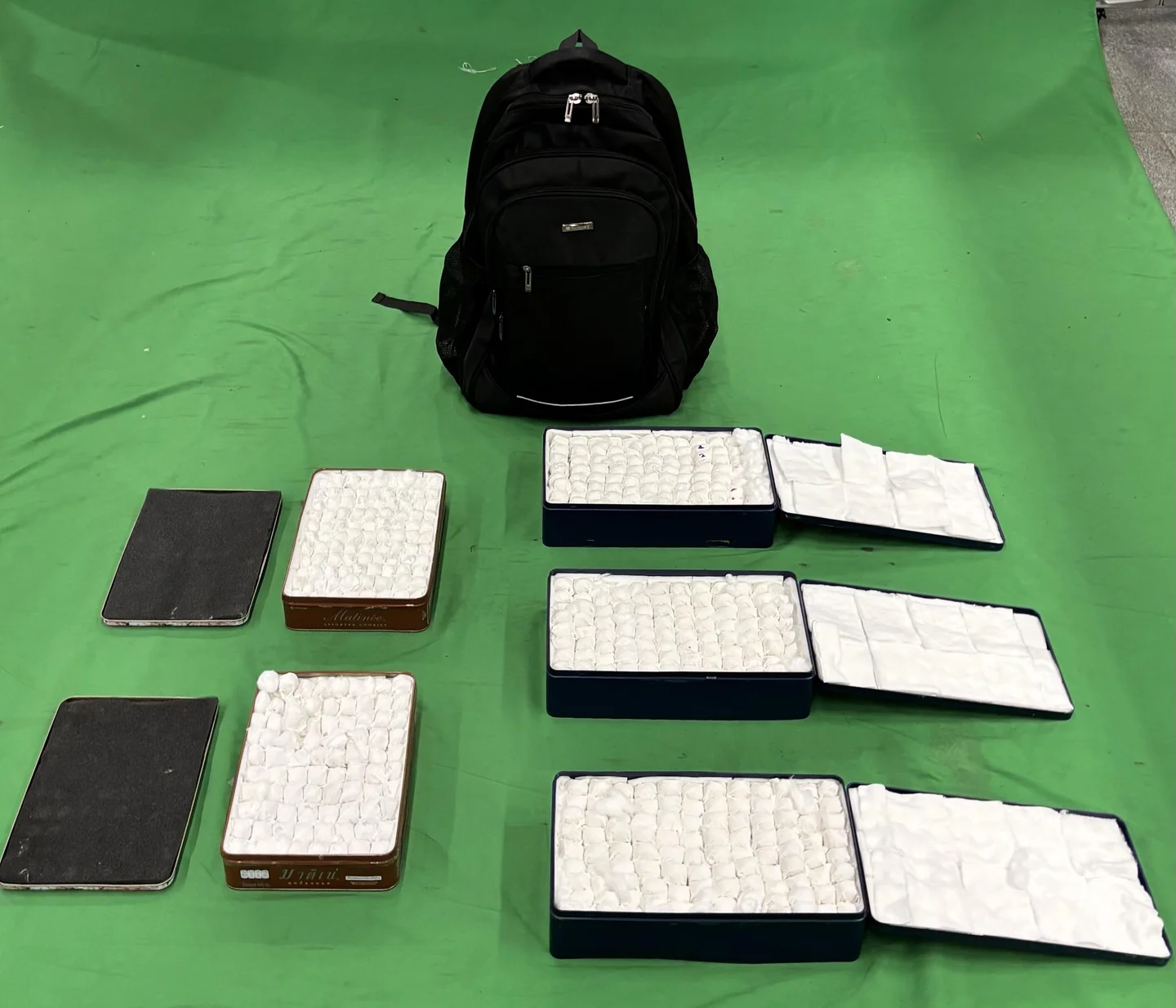
Hong Kong Customs intercepted a 27-year-old Chinese male passenger arriving from Thailand at Hong Kong International Airport on June 27 and found 777 eggs of suspected scheduled endangered bird species in metal boxes inside his carry-on baggage. The estimated market value was about HK$10.9 million, and the Agriculture, Fisheries and Conservation Department said the eggs were suspected CITES-listed endangered species. 1
The tactic was simple and oddly delicate. The eggs were not hidden inside machinery, industrial cargo, or a false compartment. They were packed into small containers and carried through the arrival hall as hand luggage. The backpack made the shipment look personal; the metal boxes made the contents look managed, not alive.
This was the week's most memorable case because the object itself changes the risk. Eggs are fragile, temperature-sensitive, and hard for a general reader to imagine as a high-value border commodity. The case also shows why live-animal trafficking is not limited to animals that can crawl, fly, or make noise at inspection.
2. 415 reptiles in a spare tyre compartment
One day earlier, Hong Kong Customs stopped an outgoing private car at Shenzhen Bay Control Point and found 2 live lizards at the centre console, plus 386 live turtles and 27 live snakes concealed in the spare tyre compartment. The 415 animals were suspected scheduled endangered species with an estimated market value of about HK$625,000; Customs arrested a 39-year-old local male driver and later released him on bail pending investigation. 2
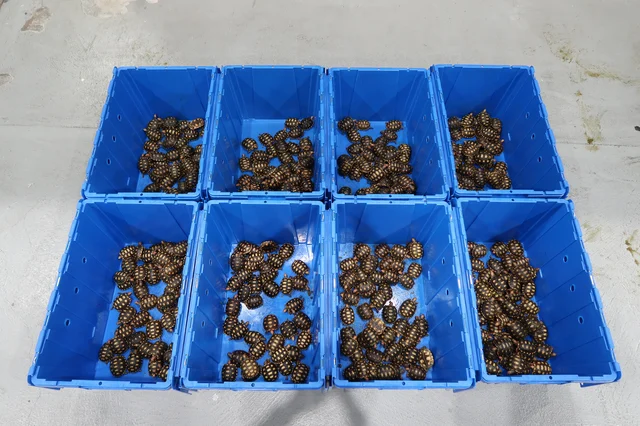
The spare tyre compartment is a classic smuggling space because it is built to hold something bulky and removable. Here, the oddity is scale. A hidden tyre well had to stand in for a transport crate for hundreds of live animals, while two lizards at the centre console added a smaller hiding place inside the same vehicle.
The tactic relied on compartmental thinking. If the car looked routine, and the spare tyre area looked like dead storage, the load might pass as part of the vehicle rather than a crowded wildlife shipment.
3. 22,000 artifacts in Florida
In the Tampa Bay area, CBP seized a large shipment of Eastern Mediterranean artifacts that Homeland Security Investigations Tampa is examining. Bay News 9 reported on June 25 that the case involved more than 12,000 items, including vases, pottery, coins, and a cuneiform artifact, with some pieces dating back more than 4,000 years. 3 ICE later said on July 3 that the seizure involved more than 22,000 artifacts and was among the largest in the agency's history. 4
The count matters because the public record changed over the week. Rather than flattening the figures into one number, the safer reading is that early coverage gave the 12,000-plus figure and ICE later gave a higher 22,000-plus figure. Both point to the same thing: this was not a single showpiece in a suitcase. It was a mass of cultural objects moving as a shipment.
The smuggling tactic, as publicly described, was less about a clever hiding place than about scale and ambiguity. Ancient coins, pottery, vases, and inscribed objects can look like collectibles until authentication, provenance, and export history are tested. John Yancey, acting special agent in charge of HSI Tampa, told Bay News 9 that agents were interested in how the custodian came into possession of the artifacts. 3
4. 28,000 diamonds and altered certificates
Vietnamese police said Thanh Hoa Province police and Ho Chi Minh City police raided 20 locations and prosecuted 22 suspects in a transnational diamond-smuggling case announced in early July. Authorities seized 1,100 diamonds and alleged that the network had smuggled more than 28,000 diamonds from India through Hong Kong into Vietnam since 2024, across 141 trips, generating about VND280 billion, or US$10.7 million, in revenue. 5
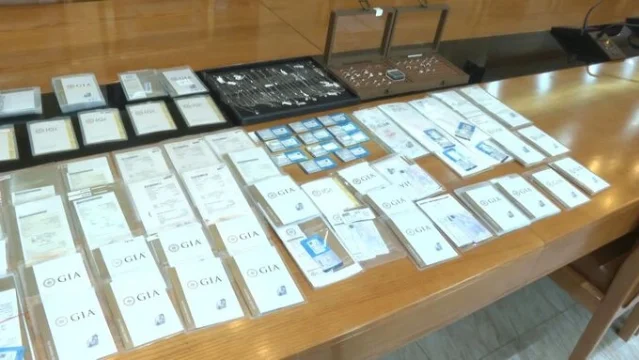
The tactic stands out because the hiding place was partly documentary. Police alleged that Dang Ngoc Thao, the 52-year-old director of PNJ Laboratory Company Limited, removed laser-inscribed GIA identification numbers from stones, replaced them with PNJ-LAB numbers, and issued fraudulent certification reports. 5
That makes the case different from a false-bottom bag. The alleged disguise covered both where the diamonds moved and what their paperwork said they were.
5. $54 million in counterfeit watches
CBP officers at the Port of Louisville intercepted a shipment from Hong Kong headed to New York and seized 375 counterfeit Audemars Piguet watches. CBP said the watches would have had a combined manufacturer's suggested retail price of more than $54 million if genuine, and CBP Centers of Excellence and Expertise determined the items were inauthentic. 6
The curiosity is the gap between object and claim. A watch is small enough to travel by parcel, but a luxury watch brand turns small objects into a huge claimed retail value. The tactic depended on trademark imitation rather than physical concealment: make the object look expensive enough to sell as luxury, but ordinary enough as a shipment to move through cargo channels.
The case also shows why counterfeit goods can be stranger than the usual fake-handbag story. The shipment was not trying to hide that it contained watches. It was trying to hide what kind of watches they really were.
6. Bulgaria's counterfeit wardrobe by the truckload
At Kapitan Andreevo, Bulgaria's border crossing with Turkey, customs officers seized more than 16,000 goods bearing famous brand trademarks after two truck inspections on June 25 and June 29. The detained goods included 14,875 textile products, 1,024 bags and purses, and 214 pairs of sports shoes or slippers; the June 29 truck alone held 6,625 textile items, including 2,000 pairs of logo-branded socks. 7
Varna Customs reported another case on July 3: 5,215 undeclared clothing and footwear items from a truck carrying goods from Turkey, including 2,010 items bearing protected luxury-brand trademarks. The goods had entered under transit regime and were then declared for release for free circulation at Varna Customs. 8
The tactic here was volume plus paperwork. These were not souvenir-level counterfeits tucked into a suitcase. They moved as commercial cargo, inside routes and declarations that made them look like normal trade until inspection turned a truck into a rolling wardrobe.
7. 484 grams of gold as jewellery
India Customs at Sri Guru Ram Dass Jee International Airport in Amritsar intercepted a male passenger who arrived from Melbourne via Kuala Lumpur on Malaysia Airlines flight MH118 on the night of July 1. Officers used X-ray scanning and personal search to recover 484 grams of 24-carat gold in the form of two bangles and one chain, valued at ₹70,66,400, or about A$126,000; the passenger was arrested under the Customs Act, 1962. 9
Gold smuggling often sounds theatrical when it involves paste, capsules, or hidden compartments. This case was quieter. The gold was jewellery, which is exactly the form in which a traveler might plausibly carry gold.
That is the trick: when the object is both contraband and a normal personal item, the inspection question changes from "what is this?" to "how much is this, and was it declared?"
Across the week, the strongest cases did not rely on one grand invention. They relied on familiar containers doing familiar work: luggage carrying eggs, a car hiding its spare-wheel space, certificates giving diamonds a new identity, trucks behaving like trade, and jewellery looking like jewellery until the numbers stopped being ordinary.
Cover image: suspected endangered bird eggs displayed after the Hong Kong airport seizure, via Hong Kong Customs and Excise Department.
References
- 1Hong Kong Customs seizes eggs of suspected scheduled endangered bird species (with photo)
- 2Hong Kong Customs seizes reptiles of suspected scheduled endangered species (with photos)
- 312,000 stolen artifacts intercepted by Tampa federal agents
- 4ICE HSI antiquities seizure in Florida is among the largest in the agency's history
- 5PNJ subsidiary director probed as police bust transnational ring smuggling 28,000 diamonds
- 6A shipment worth $54 million of counterfeit watches seized by CBP officers in Louisville
- 7Over 16,000 branded goods were seized by customs officers at the Kapitan Andreevo BCP
- 8Smuggled branded clothes and shoes were seized by customs officers from Varna Customs
- 9Indian Customs arrest Melbourne passenger after seizing 484g of gold at Amritsar airport
More from this channel
Related content
- Sign in to comment.