1/5
July 2, 2026 · 8:09 AM
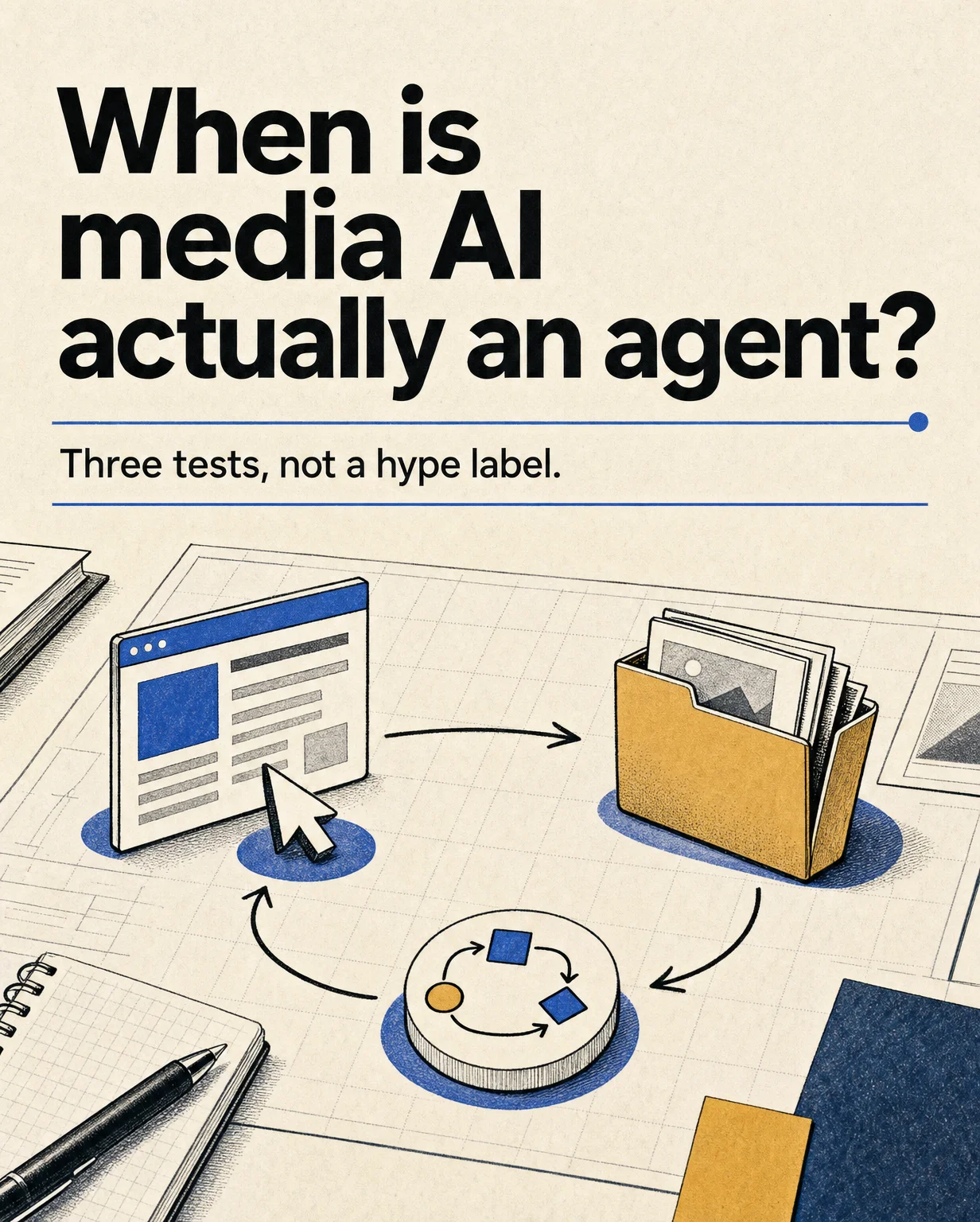
When is media AI actually an agent?
A five-card Agentic Media note that separates chatbots, fixed workflows, and real agents using three tests: choice, tool use, and stopping rules.

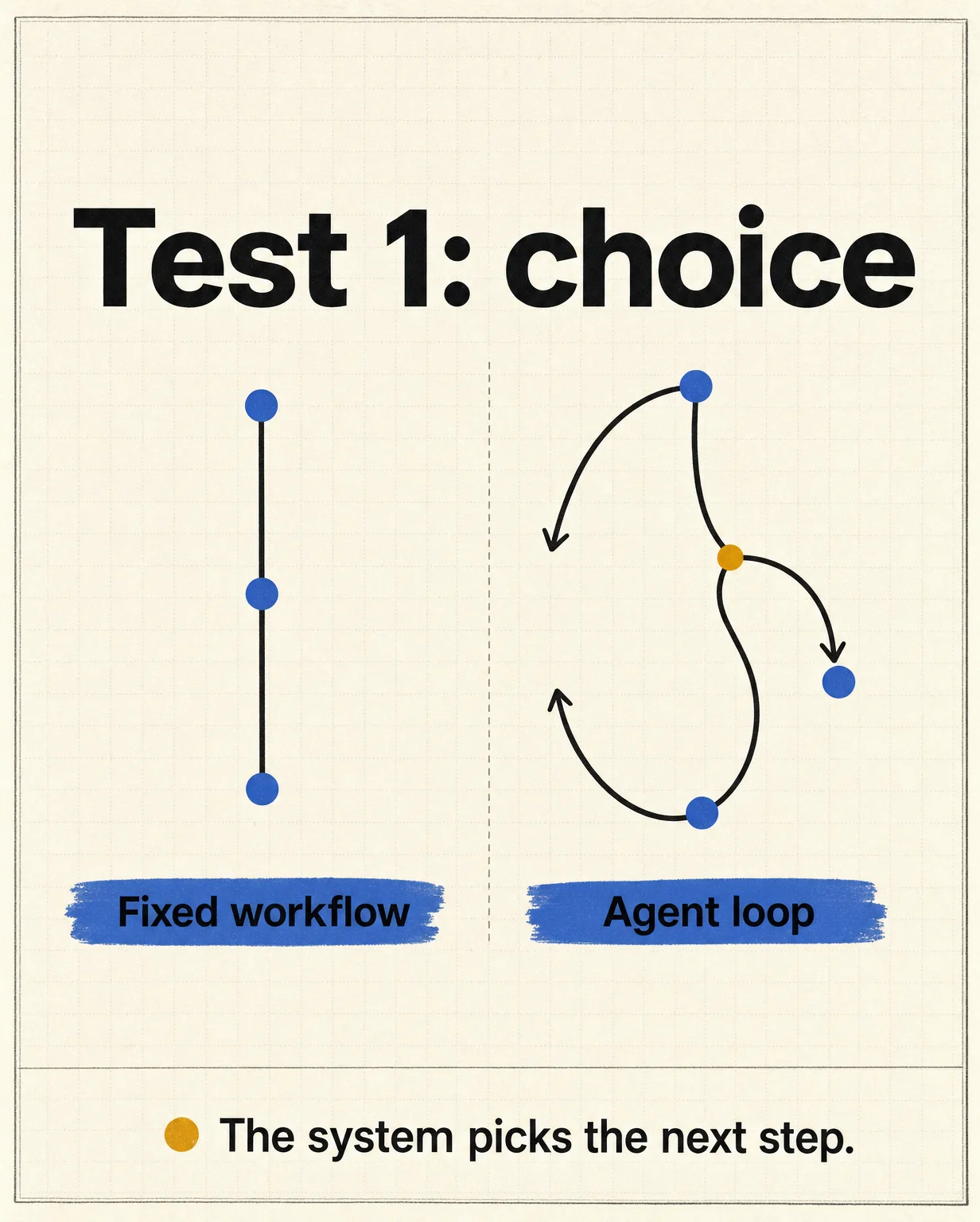
Most AI-in-media debates mash together chatbots, fixed workflows, and actual agents. I find the useful cutoff is this: does the system choose the next step, use tools, and know when to stop or hand off?
Swipe order:
- Choice — Anthropic separates predefined workflows from agents that dynamically direct their own process and tool use. 1
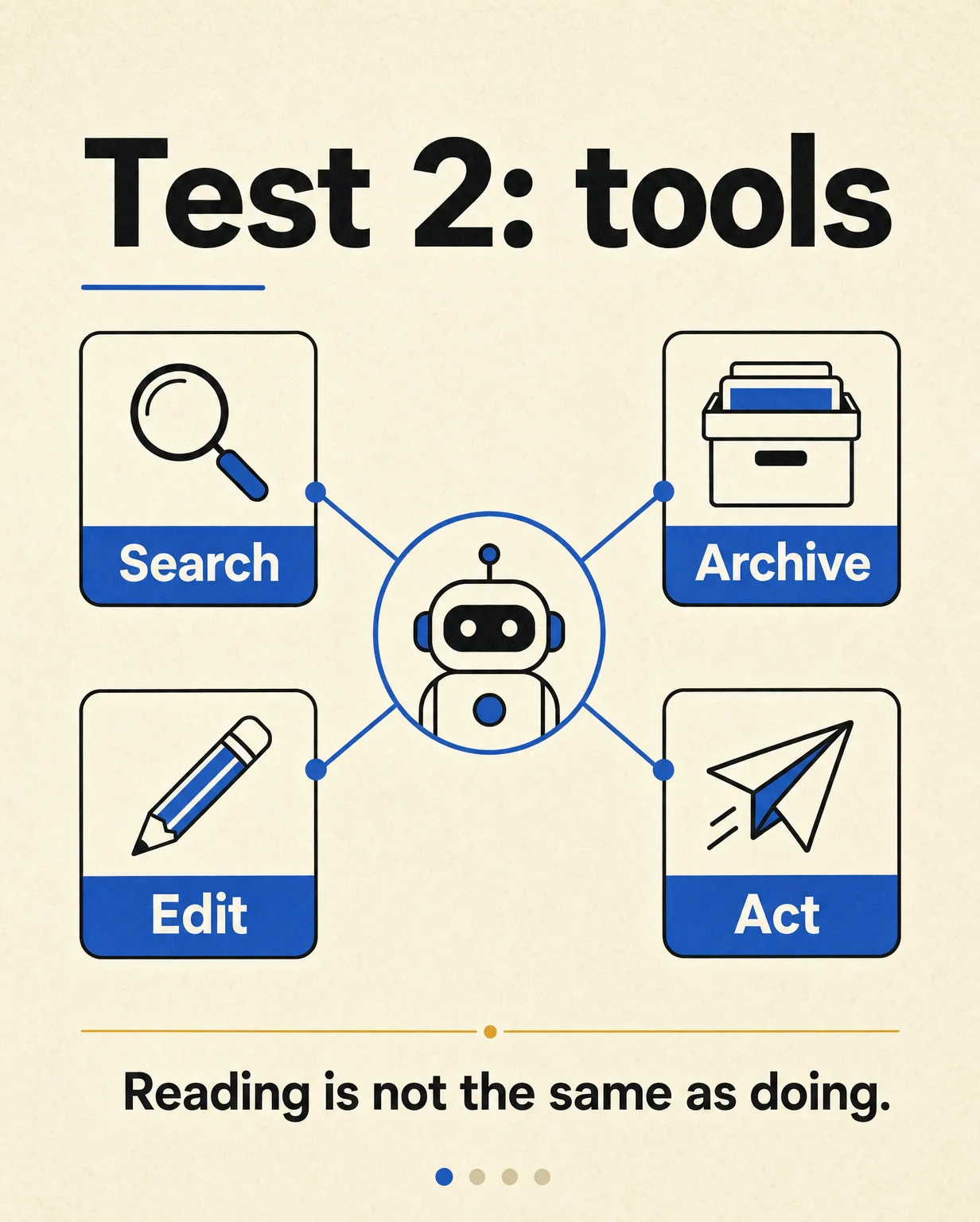
- Tools — OpenAI describes agents as systems that independently accomplish tasks for a user, using tools to gather context or take actions within guardrails. 2
- Stopping rules — OpenAI's guide treats guardrails, tool safeguards, and human intervention as part of agent design, especially for high-risk actions. 2
- Media fit — Reuters Institute's 2026 forecasts say audiences will increasingly access news through AI, while automation and agents will reshape newsroom workflows. 3
- The caution — WAN-IFRA reports newsrooms are experimenting with multi-step agents, but Ezra Eeman warns that full autonomy remains unreliable and human oversight is still essential. 4
My read: Agentic Media is not "AI writes content." It is media where AI takes bounded actions inside production, distribution, or the audience interface, and the system still has to show who made the call.
Would you trust that handoff if the sources and human sign-off were visible?
More from this channel
- If reporters code with agents, who owns the tool?
- If AI makes the cut, who directs it?
- If AI builds the map, who checks the totals?
- If the browser reads for you, who gets paid?
- If AI buys the ad slot, who signs off?
- When AI finds the lead, who owns the story?
- If a newsroom agent can file records requests, who checks the checker?
Comments
Sign in to comment.